Arhisto
Discover the stories behind Art and History that shaped our world.
×
Postmodern Art Pop Art Baroque Art Prehistoric Art Rococo Art
World History American History
Arhisto - Art History
Sign In
  • Art Movements
  • Artists & Biographies
  • World History
  • US History
  • Sculpture
  • Painting
Arhisto - Art History
  • Art Movements
  • Artists & Biographies
  • World History
  • US History
Sign In
HomePostmodern ArtCindy Sherman - The Infinite Metamorphosis of Narcissus
Cindy Sherman - The Infinite Metamorphosis of Narcissus

Cindy Sherman - The Infinite Metamorphosis of Narcissus

Postmodern Art

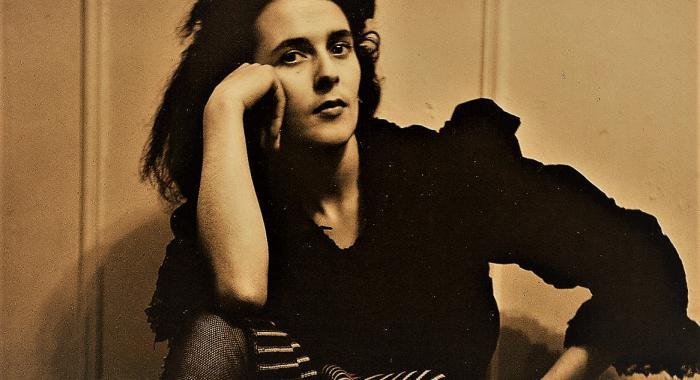
Cindy Sherman brings her body and her face to her work. For more than thirty years, she has consistently presented them as the sole subject of her art. But she does so to watch them slip away, to make them vanish through a series of dizzying metamorphoses. Cindy Sherman’s photographs—unlike the theatrical presences cruelly embodied by certain “performances” in contemporary art—do not aim for any kind of reality; they are imbued with a depth of life and refuse to be confined to the present moment. For Cindy Sherman, there is no question of presenting her own self-portraits “in the flesh.” She does bring her body, to be sure, but only as a photographic image (photogenic).
One should not conclude from this that Cindy Sherman’s work and thought are merely a headlong rush, a ruse, a concealment masking an inability to create art—or even a mere play on surfaces composed of postmodern quotations and simulacra—and that nothing in them is lived. On the contrary, this approach constitutes a series of in-depth reflections on the image of the body and the face. Sherman brilliantly illustrates the thesis of the feminists of the early 1960s. For these liberated women, the beauty of the female face and body is by no means an expression of individual identity or a unique narcissistic icon, but rather images entirely fabricated by the ruling power—the male gender. “I don’t think of them as self-portraits,” says Cindy Sherman, “nor as portraits of myself. To me, they are other people”.

“When I’m working, it’s as if I had a model,” and in the same interview: “I don’t think I’m entirely myself, except when I’m alone” (Déjà-Vu, 1982). What we must fight against is autobiography and the mirror of Narcissus. This cannot be emphasized enough. The creator of a work of quality is always unapproachable, simply because they have staged their own life. Only the mediocre recount their stories with banality. With Cindy Sherman, there are no more memories. Having no memory, she has nothing to reveal.

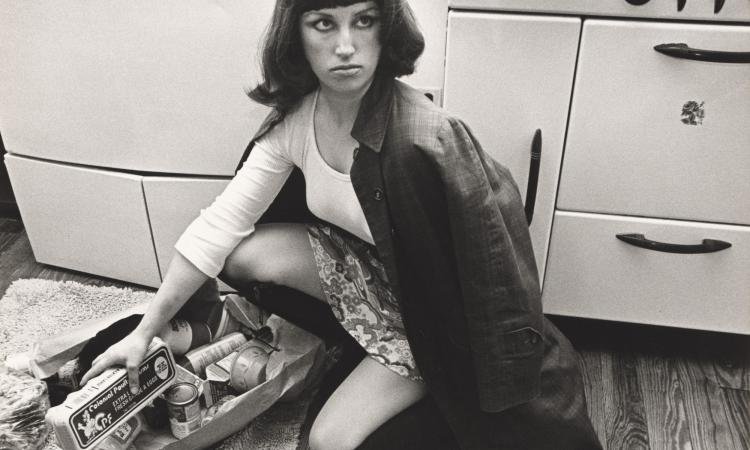
Her images consist solely of role-playing. Thus, in 1978, in Untitled No. 10, she appears as an American housewife. But this ordinary woman captured in an intimate moment is already a metamorphosis: an intruder catches her by surprise... Hitchcock isn’t far off. Cindy Sherman ushers in the era of the creative subject’s multiplicity. To ensure extreme fluidity, all her works are “untitled,” without any title of nobility.


Tags: Pictures GenerationConceptual Photography
Previous Post
Understanding a Work of Art: A Deep Dive into Masterpieces
Next Post
The Beautiful Image Betrayed of Cindy Sherman

Related Posts

  • History of American Art at the end of the nineteenth century and the new American Golden Age

    History of American Art at the end of the nineteenth century and the new American Golden Age

  • Art Teachers: Inspiring Creativity in Art Classes

    Art Teachers: Inspiring Creativity in Art Classes

  • The Beautiful Image Betrayed of Cindy Sherman

    The Beautiful Image Betrayed of Cindy Sherman

  • Cubism: Building art in freedom

    Cubism: Building art in freedom

Top Reviews

Italian Baroque Painting: Naturalism versus classicism
Artists & Biographies

Italian Baroque Painting: Naturalism versus classicism

The world of myths, magic and surrealism of Leonora Carrington art and life
Artists & Biographies

The world of myths, magic and surrealism of Leonora Carrington art and life

The 80th anniversary: Why and when was the united nations organisation established ?
U. S. History

The 80th anniversary: Why and when was the united nations organisation established ?

Popular Posts

Italian Baroque Painting: Naturalism versus classicism
Artists & Biographies

Italian Baroque Painting: Naturalism versus classicism

The world of myths, magic and surrealism of Leonora Carrington art and life
Artists & Biographies

The world of myths, magic and surrealism of Leonora Carrington art and life

The 80th anniversary: Why and when was the united nations organisation established ?
U. S. History

The 80th anniversary: Why and when was the united nations organisation established ?

ArHisto
Art Movements Artists & Biographies Analysis Guides Museum Spotlights
About Us Masthead Careers
Cubism Figurative Art Impressionism (1865 – 1885)
Advertise Contact Us Press Center
Privacy and Cookie Policy Legal Notice Terms & Conditions
© 2026 Arhisto.com