
"The world is watching... " This was the title of the teaser broadcast everywhere, far beyond insider circles, to announce the auction of Leonardo da Vinci's painting, Salvator Mundi, at Christie's, New York. This worldwide media event gives a snapshot, dated November 2017, of one of the uses of art in the great game of globalization.
The beginning of narcotic records in the art market dates back thirty years and coincides with the beginning of globalization. It was on the occasion of the sale of the Van Gogh Sunflowers in 1987, which was awarded $39.9 million at Christie's. Never seen before! Four years later in 1991, the art market collapsed, driven by the first global financial crash. At the same time, the Soviet Empire disappeared and China appeared on the commercial and cultural scene. The world is now open. The sales rooms, now international, are present and visible everywhere. They settle on all the deposits of millionaires of the planet and decide the value of art thanks to their new methods of securitization. We no longer speak of the intrinsic value of a work but of the side, of the monetary index.
Two houses dominate the intercontinental market: Sotheby's and Christie's. They compete with each other, having reached an agreement as early as 1992 on the amount of commission charged to buyers. This "conspiracy" offence will not be denounced and punished until 2004. By mutual agreement, in 2000, they reorganized the art market by creating a third sales department: in the Department of Ancient Art and Impressionist and Modern Art, they added a Department of Contemporary Art concerning works after 1960. Thus impressionism, associated with "modernity," will have the virtue of sanctuarizing and raising its sides, while "Contemporary Art" will become the new ground of speculation. The creation of this new department is a revolution. Christie's and Sotheby's abolished a major principle: that of dealing only with the second market, the first market being reserved for galleries. In the 20th century, the consecration of young artists was never made thanks to auction houses but thanks to the work of gallery owners, art critics, the taste of collectors, the legitimization of institutions in the end. The auction only dedicated older or dead artists.
After the year 2000, the way in which a work of art acquires its value changes radically. The mechanism is reversed: the very large collectors co-operate upstream with the artists to be quoted, then promote their exhibitions in institutional places before they are put in sales halls where their visibility becomes global and their rating staggering.
Institutions, particularly museums, play the game by indirectly helping to rate the works, through their viewing, their museification and their attribution of legitimacy, helped by the patrons collectors, who, in doing so, sanctuarise their collection, tax-free and conquer the flattering stature of the philanthropist.
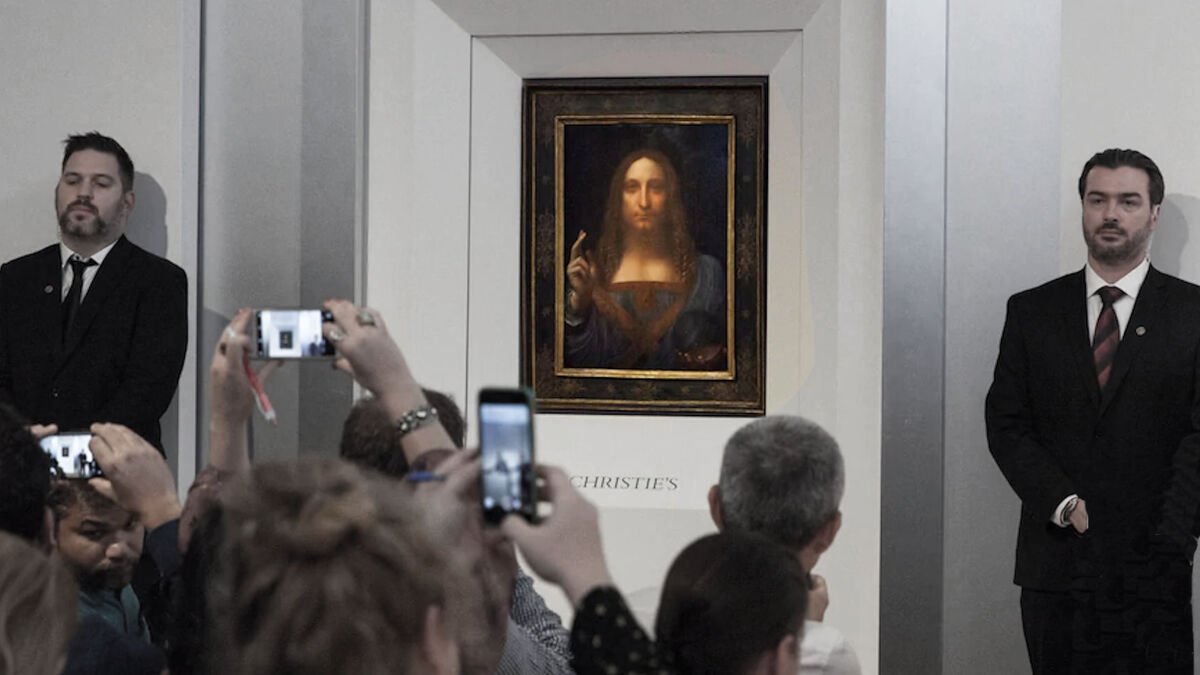
The blockbuster sale of Salvator Mundi
In November 2017, Christie's was in charge of the sale of an originally uncertain work in poor condition, nevertheless bearing the signature of Leonardo da Vinci. The way the case is handled shows both an outcome and a break in the way art and its market are conceived. The needs of marketing are decisive here. The strategy adopted will be that of the cultural industries for twenty years: gigantism and sensation. This will be a blockbuster sale.
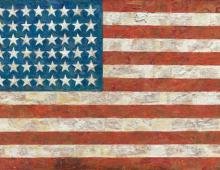
The "marketing" placement of the work will allow here the shock. To everyone's surprise, Salvator Mundi will be on sale in the "Contemporary Art" department with modern artists such as Pollock and Bacon, but also contemporary idols such as the iconic streetarter Jean Michel Basquiat, the porn-kitsch-academic artist John Currin and the African-American emerging Keny James Marshal who will see his side jump to $5 million. Enough to blow up all categories.
The contrast is striking. Contemporary art collectors, business adventurers, savvy financiers, sometimes doubtful money recyclers, are stunned by the rapprochement. Even better, they are delighted to see their usual trophies alongside the most renowned artist of the Renaissance, hero of the best-seller Da Vinci Code and the eponymous film. The clientele of insiders, cultivated collectors, customary of the Department of Ancient Art, would have had a more critical eye, more attentive to the experts who, for their part, gave 100 million dollars, given the problematic reality of the painting.
But Christie's went a step further by making this auction an international cultural event. Even before the sale, Christ "Savior of the World" was treated as a star of the show business. He went on tour around the world, adorned with storytelling, adorned with derivatives. The media relayed, followed by the social media buzz, thanks to the excellent teaser on YouTube entitled "The World Is Watching."
Thus, on November 21, 2017, in a few minutes, the records of Picasso and even Gauguin were broken. Two financial funds eventually contested the auction. Nineteen minutes were enough to hear the hammer resonate at $400.3 million.
Despite the excitement of the sale, the winner of the auction, a financial fund of Mohamed bin Salman, Crown Prince of Saudi Arabia, made a very calculated and reasonable purchase: the work was intended for a future museum, but also to tour the world's museums. Jean-Luc Martinez, President of the Louvre Museum, selected her for a blockbuster exhibition at the Louvre Abu Dhabi in September 2018, then for the major retrospective dedicated to Leonardo da Vinci in Paris in October 2019. The ticketing forecast accounts were promising! But the Louvre, in doing so, confirmed its doubtful authenticity. However, things did not go as planned... Salvator Mundi was not recognized as Leonard's hand by many curators and experts, those of the Louvre and other great museums. The Louvre, to preserve its reputation, renounced the gain and cancelled both events. The construction of Salvator Mundi's economic operation collapsed. The work became a grain of sand gripping the machine that is the great international industry of interconnected museums, set up for two decades.
Artprice, which collects data on the economy of museums, notes that around 700 museums have been created worldwide every year since 2000 and that the number of visitors has increased thirty-fold.
The sale of Salvator Mundi to the "Contemporary Art" department revealed more strongly than ever that international sales halls impose value by rating, thanks to their marketing and communication strategy. They deny the evaluation of experts in astronomical proportions. Thus, in this sale, the auction made four times their evaluation.
A similar strategy worked well two months before Salvator Mundi was sold to Christie's in September 2017. At a Contemporary Art sale, Sotheby's exhibited Michael Schumacher's Formula 1 Ferrari. Estimated at $4 million, it has gone to $7.5 million. It has thus changed its status: an exceptional car, an object of worship, it has become a work of art.
In fact, art is now treated as a "product," be it "old," "modern," or "contemporary." This is the "global culture." In art, would globalization involve a process of "decibilization"? A phenomenon of acculturation? An occultation of creations in the suite of civilizations, behind an encrypted, financial, factual, extremely simple and visible statement of the facial value of a "contemporary art" work?
The sale of Salvator Mundi had a revealing effect on the distance between intrinsic value and face value and conflicts of interest between market and institutions. This event has not finished bouncing back! In 2019, a TEM chief curator, a recognized master specialist, publicly challenges its authenticity. So far, the picture has disappeared, no exposure is planned, it is not known where it is or who owns it. According to the latest news, the Abu Dhabi Department of Culture and Tourism has it in its possession.