
American art appeared in its beginnings as an attempt to recreate an abandoned environment - sometimes with a certain nostalgia - in the Old World. American art, between the 1670s and the eve of the War of Independence, was mainly intended to be functional: British-inspired furniture and silversmiths dominate.
The first American school, called West (named after its creator), was founded in 1763 and allowed three generations of painters to assert their talent. Thanks to Benjamin West, American artists such as Copley, Peale, Stuart and Trumbull imposed the originality of their painting on the brilliant English school of the XVII th century. The character of the American people in the middle of the XVIII century is probably best revealed in the portraits of John Singleton Copley, made in Boston, with the exception of a few that the artist painted in New York during his stay in that city in 1771. Having learned almost everything by himself, but clearly influenced by some Boston artists, Copley was able to elevate the demand for similarity demanded by his clients to the level of the great art, relying on careful observation, very precise working methods and skilful use of the clear-dark. His works, of unquestionable quality even with regard to English criteria, set the standard for all colonial America. It was only with the return from Europe in 1793 of another great American portraitist, Gilbert Stuart, that the charm exercised by this art in the acute style was broken. In the eyes of ambitious artists like Copley, America's career opportunities seemed simply inadequate. They dreamed of European galleries and collections of painting, yearned for the company of artists of their dip and the possibility of being ordered someday other than portraits.
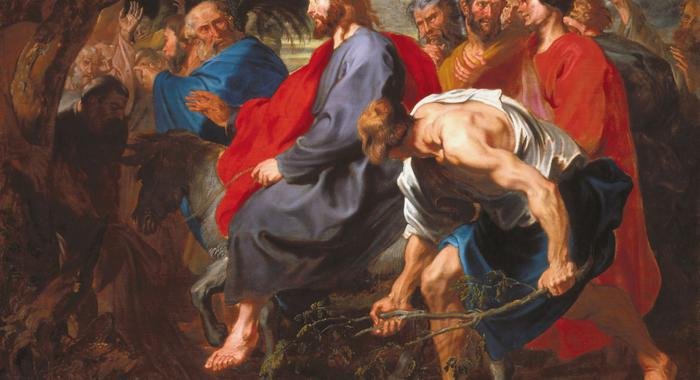
Benjamin West, born and educated in Philadelphia, was the first American painter to make a name for himself in London. Before that, from 1760 onwards, West had spent three years in Italy where he had studied the sculpture and architecture of ancient Rome as well as the famous masterpieces of painting of the 15th and 16th centuries. His passion for antiquity, encouraged by the intellectual climate then prevailing in Rome, led him to paint representations of heroic facts, borrowed from a remote or recent past, which are among the first works to be described as neoclassical. These paintings made him, in England, a highly admired and solicited painter, and later earned him the title of painter of the history of King George III, then president of the Royal Academy. A generous man, West opened his London home and studio to American painters who expanded their cultural horizons and perfected their training in the Old World. In The American School one of them, Matthew Pratt, pays tribute to the generosity of his teacher. Charles Willson Peale, Gilbert Stuart, and John Trumbull later benefited from Benjamin West's hospitality.
At the time of Copley's departure for Europe, it was clear that a military confrontation between the metropolis and the American colonies would be inevitable. Despite marked regional differences, reflected in its artistic output, America was united in its condemnation of Britain's recently renewed attempts to exert greater commercial and political control over the colonies. In 1776 the Declaration of Independence was pronounced, in unforgettable terms, largely due to the pen of Thomas Jefferson, and which gave birth - at least on paper - to the United States of America. But it was first necessary to go through war.
Paradoxically, political independence had the primary effect of bringing American art closer to its English models. The years of war had isolated the country in both artistic and commercial terms; when peace and prosperity were restored, there was on the one hand an increased desire for imported goods, and on the other an entirely new style, the neoclassical, to be assimilated. Yet the regional character of American art: did not disappear during this period; on the contrary, its diversity increased further with the advent of Salem, Massachusetts, and Baltimore, Maryland, as important artistic centres.
Characterized at first by its unfamiliar surfaces, its geometrical simplicity and the delicacy of its various elements, the neoclassical style soon evolved into more robust, more ornate forms, as Europe restored antiquity to the taste of the day. France, during the Directory and Consulate (from 1795 to 1804), took the lead in this movement, which was to become the official style in the Napoleonic Empire (1804 to 1815). America, which had watched with horror the events of the French Revolution, began to reconcile, under the presidency of Thomas Jefferson, with its former ally of the War of Independence. As early as 1800, France's influence on American art competed with England. American artists now turn as much to Paris as to London to draw their stylistic inspiration, resulting in a certain ambivalence that will gradually mark the art of the beginning of the federal period. In painting, for example, Gilbert Stuart brought back to America the very pictorial approach of the portrait which was then in vogue in London, while John Vanderlyn preferred the somewhat cold and dry academism practised by Jacques-Louis David in Paris.
The years following the cessation of hostilities with Britain were years of relatively steady growth. One of the results of this general increase in national wealth was the advent of the American middle class in economic, political or cultural terms. From now on, he would leave artists and craftsmen who could satisfy the aesthetic needs of their own class. Thus began a quite considerable production of objects of a style which today is wrongly described as popular, rural, primitive or naive art, but which simply constituted the art of the man of the street. These objects were sometimes the work of professional artists, such as Ralph Earl, who had studied in England and was familiar with the latest trends in portrait art; others were the result of less well-informed but infinitely more creative sensibilities.
Although neoclassicism remained predominant in architecture and decorative art until about 1840, it was evident that in its late phase it included elements that had little to do with classical disipline, republican virtue, or the reserve of rationalism. In the decorative arts this change, inspired once again by the European precedents, soon found its expression in various revival, eclectic movements, which would succeed one another at a rapid pace. The trace of it is already discerned, before that, in painting and literature. It would be quite easy to consider these various periods as a whole and to see them as an American version of European romanticism, but it would be, although correct in a sense, to ignore the American national circumstances which governed their birth.
First there was the question of American identity: who was this new man, the American? Then the question of the country itself: what was its real importance, what importance could it be given? European romantic ideas concerning the primacy of emotions, the importance of Nature and God for man and society, were perceived in the United States in a very different psychological context, from which came the novels of the Low Leather series by James Fenimore Cooper - which were very similar, it is true, to the historical novels of Walter Scott - as well as the genre paintings of George Caleb Bingham (Board 39) and William Sidney Mount, or the landscapes of the Hudson River School.
In addition to genre painting and landscape, still life greatly benefited from the expansion of American cultural horizons in the early 19th century. Paradoxically, the painting of history, in which America had made its first notable contributions to the international art scene with the London works of West and Copley, remained unproductive. Perhaps the simple material dimensions of these works are too vast, and their content too bulky and too boring for American taste. More and more, the major philosophical, religious or moral themes that were formerly part of history painting were now dealt with by landscape painting. The natural greatness of this immense country would serve as a symbol for a painting which, if it seemed closely faithful to reality, was first of all a highly idealistic and emotionally charged art. This tradition began with Thomas Cole, who also painted works with openly religious and historical content, and whose influence and teaching gave rise to an important painting school based in New York. The epigones of Cole, Asher B. Durand and Frédéric E. Church, adopted the style of the Hudson River School - named after the majestic New York State River that inspired many of its painters - and developed it in the sense of a deeper taste for detail and greater realism. With Church in particular, the old style took a truly dramatic turn, extending beyond national boundaries to the whole world, which many critics interpreted as echoing, in painting, the expansionist nationalism of the mid-nineteenth century.
The first of the main revival styles of the pre-Civil War period, which would so profoundly alter the appearance of the decorative arts, was the so-called revival gothic style. In furniture, this style had appeared as early as the 1820s under the impetus of neoclassical architects who, for the most part, had observed the adaptability of the Gothic style to ecclesiastical buildings and picturesque mansions. The gothic revival succeeded in the 1850s, or perhaps earlier, the more exuberant styles called rococo revival and revival. Once established, each of these styles would have a remarkable longevity. In many homes they coexisted in a pleasant eclecticism that continued to characterize the majority of American interiors until the end of the nineteenth century. It is sometimes difficult to determine from the only aspect of a revival-style piece when it was made. However, if the object has a surprisingly high degree of luxury and stylistic complexity, it is almost certainly post-Civil War. Indeed, the unbridled industrialization that followed the war - which stimulated the war - gave rise to immense fortunes, which alone made it possible to acquire objects of this type.
As was the case in the early decades of the nineteenth century, literature and painting were the first arts to record the change in attitudes of the post-Civil War period. In painting there were two major trends: one observed a detailed realism, almost raw, the other aimed at refinement and aesthetics. At the risk of simplifying things, it can be said that the first trend found its motivation in the desire to show the world as it was, while the second took its place in the idea that only a retreat in the ideal world of art made these difficult times more bearable. What a change, between the authentic but little emotional patriotism of Washington crossing Leutze's Delaware, and the psychological complexity of the Prisoners brought back from Homer's front or the implicit and unpretentious heroism of Max Schmitt's rowing portrait by Eakins! What a difference, too, between the redemptive landscapes of the Hudson River School and Whistler's morally neutral nightlife! Such changes, it is true, were manifested only in the highest spheres of American art:; to more modest degrees, the pre-Civil War sentimentalism, despite its historical inadequacy, continued to sell itself, in painting as well as in architecture and decorative arts. They were not content to continue exploiting the various possibilities of the revival, but they were now doing so in a way that clearly revealed the bad taste of recent fortunes. A work such as Eastman Johnson's The Hatch Family, an exercise in interior decoration as well as painting, attempts to reconcile the ostentatious postwar aspect with the more noble values glorifying the home, ardently preached by many pre-war authors. It was not until the 1890s and the influence of a new refinement from Europe (itself influenced by the example of Eastern art) that a more restrained and thoughtful approach to the decorative arts emerged in the work of talented creators such as Christian Herter.
In the 20th century the United States presents an uninterrupted succession of great creators who have acquired an international audience, including: the architect Franck Lloyd Wright, the painter Edward Hopper and the great "innovators" Jackson Pollock, Mark Rothko, Willem de Kooning, Alexander Calder, Andy War,, Roy Lich, and James Rosenquist